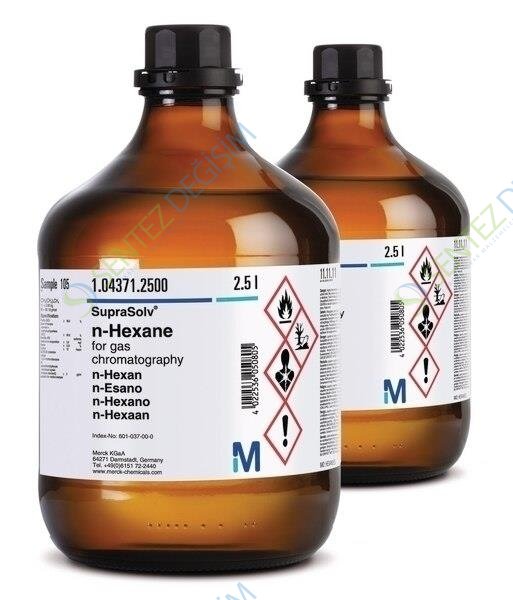
MERCK 806072.2500 1-Methyl -2- Pyrrolidone for Synthesis CAS No.872-50-4
| Description |
|---|
| Catalogue Number | 806072 |
| Synonyms | NMP, N-Methyl-2-pyrrolidone |
| Overview | EMPLURA® is our low-cost alternative to high-purity qualities. With EMPLURA® we offer a range of solvents for a plurality of basic applications in non-regulated industries and for less demanding applications, preparative laboratory work and cleaning purposes. EMPLURA® solvents provide adequate specifications with the most important parameters. |
| Product Information |
|---|
| CAS number | 872-50-4 |
| EC index number | 606-021-00-7 |
| EC number | 212-828-1 |
| Hill Formula | C₅H₉NO |
| Molar Mass | 99.13 g/mol |
| HS Code | 2933 79 00 |
| Structure formula Image |
| Quality Level | MQ200 |
| Physicochemical Information |
|---|
| Boiling point | 202 °C (1013 hPa) |
| Density | 1.03 g/cm3 (25 °C) |
| Explosion limit | 1.3 - 9.5 %(V) |
| Flash point | 91 °C |
| Ignition temperature | 245 °C |
| Melting Point | -24.2 °C |
| pH value | 8.5 - 10.0 (100 g/l, H₂O, 20 °C) |
| Vapor pressure | 0.32 hPa (20 °C) |
| Solubility | 1000 g/l |
| Toxicological Information |
|---|
| LD 50 oral | LD50 Rat 3598 mg/kg |
| LD 50 dermal | LD50 Rabbit 8000 mg/kg |
| Safety Information according to GHS |
|---|
| Hazard Pictogram(s) | |
| Hazard Statement(s) | H315: Causes skin irritation.H319: Causes serious eye irritation.H335: May cause respiratory irritation.H360D: May damage the unborn child. |
| Precautionary Statement(s) | P202: Do not handle until all safety precautions have been read and understood.P261: Avoid breathing mist or vapours.P264: Wash skin thoroughly after handling.P302 + P352: IF ON SKIN: Wash with plenty of water.P305 + P351 + P338: IF IN EYES: Rinse cautiously with water for several minutes. Remove contact lenses, if present and easy to do. Continue rinsing.P308 + P313: IF exposed or concerned: Get medical advice/ attention. |
| Signal Word | Danger |
| RTECS | UY5790000 |
| Storage class | 6.1C Combustible, acute toxic Cat.3 / toxic compounds or compounds which causing chronic effects |
| WGK | WGK 1 slightly hazardous to water |
| Disposal | 3Relatively unreactive organic reagents should be collected in container A. If halogenated, they should be collected in container B. For solid residues use container C. |
| Safety Information |
|---|
| Categories of danger | toxic for reproduction, irritant |
| Storage and Shipping Information |
|---|
| Storage | Store at +2°C to +30°C. |
| Transport Information |
|---|
| Declaration (railroad and road) ADR, RID | Kein Gefahrgut |
| Declaration (transport by air) IATA-DGR | No Dangerous Good |
| Declaration (transport by sea) IMDG-Code | No Dangerous Good |
| Specifications |
|---|
| Purity (GC) | ≥ 99.5 % |
| Identity (IR) | conforms |
| Color | ≤ 10 Hazen |
| Density (d 20 °C/ 4 °C) | 1.031 - 1.033 |
| Refractive index (n 20/D) | 1.4680 - 1.4730 |
| Acidity | ≤ 0.0002 meq/g |
| Alkalinity | ≤ 0.003 meq/g |
| Water | ≤ 0.10 % |
| Global Trade Item Number |
|---|
| Catalogue Number | GTIN |
|---|
| 8060721000 | 04022536389097 |
| 8060722500 | 04022536389103 |
| 8060729011 | 04027269350420 |
| 8060729025 | 04027269214135 |